Just as the name implies, this is a top 100 of my personal favorite games of all time. Keep in mind that this list is my opinion and no-one else's, so if you don't agree with an included game or where it's placed... I honestly don't care!
100. Battletoads (Rare, 1991)

Battletoads is a name that brings back fond gaming memories and thoughts of dread in roughly equal measure. On one hand, it is a game known for being well designed, containing tons of variety and having fantastic visual effects and music for the NES. On the other hand, it's notorious for being
punishingly difficult. Much of the game is comprised of obstacle courses that require nearly perfect execution to make it through, and one mistake usually resulted in your death and sent you back to the previous checkpoint. Even the two player mode didn't help much with this, as one player's death on an obstacle course would end the attempt for both, and if one person lost all their lives, both would be booted to the continue screen and have to restart the level - questionable programming, to be sure. But as a single player game, it was a great challenge and exceptionally fun once you were used to its special brand of sadism, and hey, if you could actually beat it in one go, even with the lives code, you were
the man.
99. Saturn Bomberman (Hudson Soft/Eleven, 1997)
The best Bomberman game of all time. Yes, really. Building on the foundations set up by Mega Bomberman and the Super Bomberman games on 16-bit platforms, they had all the same powerups and gameplay innovations from those and took advantage of the high res, gorgeous 2D graphics that the Saturn could deliver. But what really sold it was the ten-player simultaneous mode, which is just a hilarious melee of sheer chaos. Yes, it's expensive to set up - you need a copy of the game, two multitaps, ten controllers and a relatively large TV to see the action with any degree of clarity, but man is it a rush..
98. Star Fox 64 (Nintendo, 1997)

A great many fans ended up disappointed when Star Fox 2 was cancelled. Understandable, as the game looked fantastic, expanding on the original in every way imaginable and featuring some downright amazing 3D graphics on the SNES (which, as stated, was not designed with 3D graphics in mind at all). Well, Nintendo somewhat made it up to us with Star Fox 64, a solid remake of the original game featuring a voice acted narrative (with actual voice acting, not garbled gibberish), sharp graphics, gigantic bosses, clever stage designs and numerous stage routes that gave the game some substantial replay value. There were even two new controllable vehicles in the form of the Landmaster Tank and the Blue Marine sub, which were pretty cool but sadly limited to specific stages. All in all, though, we have a solid entertaining game that's fun to try and get a high score on. It was also the first game that touted the use of the "Rumble Pak", the device that introduced proper force feedback to gaming and would shake your controller whenever you took an especially big hit. Every game console since has incorporated that into their controllers in some form or another, so it was a pretty big deal at the time.
97. Perfect Dark (Rare, 2000)
If Goldeneye broke new ground for the mission-driven shooter genre, then Perfect Dark took it to, well, perfection. This was in no small part due to the addition of the Nintendo 64's Expansion Pak, which allowed for much more detailed visuals and voiceovers for many of the characters, not to mention much more threatening enemy AI. Additionally, the futuristic setting also allows for all sorts of clever new gadgets like ricocheting "pinball grenades", laptop sentry guns, and submachine guns with automatic lock-on functionality. That's all good, but like Goldeneye, the real draw is in its multiplayer, which adds in several new game modes as well as the ability to have up to eight computer-controlled "simulants" running around, making for some very intense and surprisingly strategic matches. Everything about Perfect Dark is just pure fun.
96. Starcraft II (Blizzard, 2010)

The original Starcraft was a game-changer with its three very distinct but balanced factions and fast paced, yet surprisingly deep design. Starcraft II keeps that philosophy intact but also massively improves the original 's clunky pathfinding, AI and interface, adds in many new units, co-op missions and a well-crafted three-part episodic campaign with team customization, branching story paths and many new unit types to experiment with. Despite lacking a few prominent features of the original (like, y'know, LAN support?), Starcraft II is a brilliant experience both online and solo, and is still one of the finest real time strategy games ever made.
95. Ikenfell (Happy Ray Games, 2020)
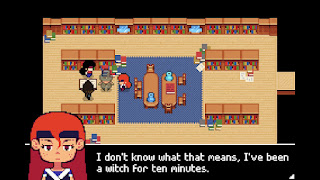
RPGs are a notoriously difficult and time-consuming genre to develop, which is why well-made indie RPGs are pretty rare, but something I greatly enjoy when they're done well. Ikenfell definitely fits the bill, with, some low-resolution but surprisingly expressive and well-animated sprites, some wonderful music (by the two who composed for the show Steven Universe, so they definitely know what they're doing) and a very charming cast of well-written characters. Its gameplay is nothing especially groundbreaking (working in the timed button presses of Super Mario RPG and some light grid-based combat tactics), but serviceable and fun, and it's just the right length that it remains fun throughout and never wears out its welcome. A delightful experience from start to finish.
94. Fallout 2 (Black Isle Studios, 1998)
The original Fallout definitely had charm to spare with its open-ended character development, multiple ways to complete objectives, heavy world lore and a wry sense of humor despite itself, but Fallout 2 took all of that and expanded upon it tenfold. Bigger guns, new monsters, a wide variety of recruitable characters, and tons of new locations to explore and characters to interact with - some lovable, some you just love to hate. There's also a reworked Perk system and a very handy new feature in the form of a drivable car, which makes transportation around the landscape more convenient and gives you plenty of extra carrying capacity to boot. A stellar RPG experience from beginning to end and, again, one of the finest games in the CRPG genre.
93. Ultima VI: The False Prophet (Origin Systems, 1990)
It seemed that every Ultima title did its best to up the ante over the previous one, and Ultima VI was no different in that regard. While the previous games had a recognizable world to venture through with a lot of surprising nods to realism, Ultima VI set out to create an immersive, realistic world that you'd live an alternate life in. You could hunt animals for food, milk cows, load and fire cannons, move furniture around and so forth, and creative solutions to get around problems often work. The story was another great one too, starting with what appears to be a hostile invasion but having you looking at things from a very different perspective by the end. The somewhat clunky UI and limited viewpoint don't make it my favorite Ultima to play, but even with the annoyances of constantly running into dead-ends and getting lost in towns, it's another fantastic RPG from Origin and a very worthwhile entry to a legendary franchise.
92. Super Mario RPG (ArtePiazza, 2023)
A dream people have been screaming about for almost thirty years finally became a reality when Nintendo announced the Mario RPG remake. Developed by ArtePiazza (who also worked on several of the Dragon Quest remakes), the game is gorgeously animated, has some amazing updated music and a few new mechanics added; successfully timing attacks and blocks builds up a Chain that steadily grants bonuses to your party, and Triple Attacks - something similar to a limit break which slowly charges as you fight your way through battles. And of course, there's no shortage of postgame content for gamers seeking a new challenge after clearing the main game, some of which really puts your skills to the test. A faithful yet surprisingly fresh remake of a classic.
91. NieR: Automata (PlatinumGames, PS4/PC)Gamers in the PS2/PS3 era probably remember a little company called Cavia, known for making games replete with dark themes and complex characters, but unfortunately masked beneath a layer of mediocre gameplay that made them rather difficult to endure. But with their bankruptcy, staff and IPs falling to Marvelous and development for Automata being farmed out to PlatinumGames, many people finally got the chance to see Yoko Taro's true genius on display. Case in point, NieR: Automata is not just an enjoyable game that combines elements of open-world games, character action titles and RPGs, but also a strong story with a surreal atmosphere and some very memorable characters. Set all of that on the backdrop of some beautiful environments and an absolutely amazing soundtrack, and you have what is easily the finest title ever associated with Cavia's name. As well as one of the greatest emotional rides I've ever experienced in a game.

 If Goldeneye broke new ground for the mission-driven shooter genre, then Perfect Dark took it to, well, perfection. This was in no small part due to the addition of the Nintendo 64's Expansion Pak, which allowed for much more detailed visuals and voiceovers for many of the characters, not to mention much more threatening enemy AI. Additionally, the futuristic setting also allows for all sorts of clever new gadgets like ricocheting "pinball grenades", laptop sentry guns, and submachine guns with automatic lock-on functionality. That's all good, but like Goldeneye, the real draw is in its multiplayer, which adds in several new game modes as well as the ability to have up to eight computer-controlled "simulants" running around, making for some very intense and surprisingly strategic matches. Everything about Perfect Dark is just pure fun.


 Gamers in the PS2/PS3 era probably remember a little company called Cavia, known for making games replete with dark themes and complex characters, but unfortunately masked beneath a layer of mediocre gameplay that made them rather difficult to endure. But with their bankruptcy, staff and IPs falling to Marvelous and development for Automata being farmed out to PlatinumGames, many people finally got the chance to see Yoko Taro's true genius on display. Case in point, NieR: Automata is not just an enjoyable game that combines elements of open-world games, character action titles and RPGs, but also a strong story with a surreal atmosphere and some very memorable characters. Set all of that on the backdrop of some beautiful environments and an absolutely amazing soundtrack, and you have what is easily the finest title ever associated with Cavia's name. As well as one of the greatest emotional rides I've ever experienced in a game.